


You may have heard of virtual autism if you’ve been browsing parenting groups or are concerned that your child may be “different” due to excessive screen time.
As a parent who has experienced the screen-time dilemma, I understand how perplexing it can be: Is this true? Is screen time the cause of my child’s autism? Can screen time decrease IQ? How should I proceed?
Let’s dissect it in an open, straightforward conversation.
The most important thing to be aware of up front is this:
Clinical autism and virtual autism are not the same! It is not a true diagnosis like Autism Spectrum Disorder (ASD), but rather a non-medical term used to describe autism-like symptoms that some kids exhibit after excessive screen time.
These behaviours often improve when screen time is reduced and real-world interaction is added. So, don’t panic straight away. Virtual autism sounds scary, but in most cases, there is a “simple” fix, and it always has to do with screen time.
Let’s learn what virtual autism is, how to spot its symptoms, and how to treat it as quickly as possible.

What Is Virtual Autism?
Some researchers and clinicians refer to a pattern of behaviours in young children that resemble autism but appear after excessive screen time, especially at very early ages, as “virtual autism.”
Although it’s not a recognised medical diagnosis and is still being researched, many parents and professionals use the term to discuss actual difficulties they’ve observed.
To put it another way, virtual autism does not refer to autistic people, but rather to symptoms of autism that are associated with excessive screen time during crucial early developmental stages. Experts emphasise that with modifications to screen habits and more human interaction, virtual autism behaviours are usually reversible.
Why Virtual Autism is Suddenly a Popular Topic?
Well, we live in a digital world, and like it or not, our kids are surrounded by technology and screens from a very early age. Yes, screens have some benefits, but babies and younger kids cannot cope with everything they see, so they respond with unusual behaviour that people define as virtual autism.
As smartphones, tablets, and televisions became commonplace, some parents and medical professionals observed that toddlers who were exposed to a lot of screens occasionally displayed social or communication problems that reminded them of autism.
The concept was initially brought to light by a Romanian psychologist, Marius Zamfir, who saw toddlers who were exposed to digital content for four or more hours every day. He discovered autism-like behaviours, such as limited social interaction and delayed speech, but pointed out that this wasn’t typical autism.
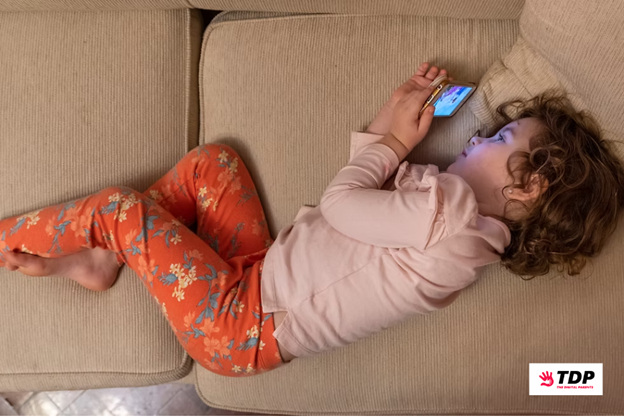
Since then, research has linked excessive screen time to social communication issues, language delays, and shorter attention spans. However, criticism is crucial because correlation does not establish that screens “cause” autism.
With that said, the concept of virtual autism can help explain why some children who use screens a lot exhibit troubling behaviours.
Virtual Autism Symptoms (What Parents See First)
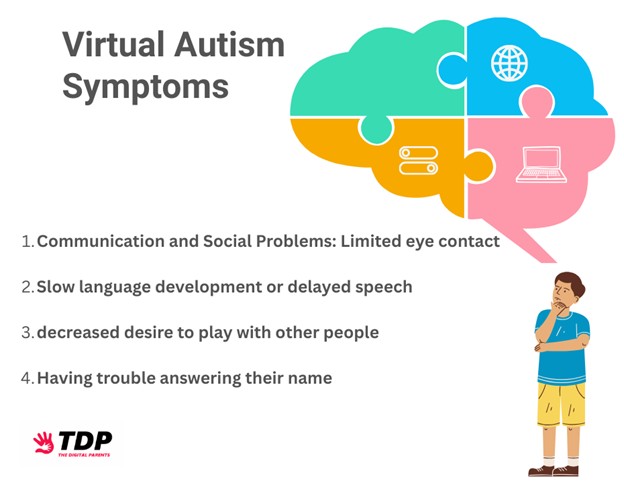
Virtual autism symptoms are similar to those of classical autism, but they differ significantly in that they tend to get better when a child spends less time on screens and more time interacting with people in the real world.
Parents frequently report the following:
- Communication and Social Problems: Limited eye contact
- Slow language development or delayed speech
- Decreased desire to play with other people
- Having trouble answering their name
These can occur when children spend a lot of time staring at screens rather than engaging with others.
Behavior problems and Attention Problems.
- Short attention spans
- Irritability
- Difficulty focusing on people or toys
- Repetitive or “zoned out” behavior
These actions can disappear with a reduction of screens and more play and storytelling occurring in the real world.
Delay of emotions and Interactions.
- Less show of emotion
- Not pointing, gesturing, or smiling back.
Parents can often tell the difference when their own child appears to be more in touch with the screens than with people in real life.
Reason Why Virtual Autism Is Not the Real Autism

This is a major fact: Virtual autism is not Autism Spectrum Disorder (ASD). ASD is a neurodevelopmental disorder that has a close genetic and neurological basis and is typically detected at a young age and persists during the lifetime of the affected individual. So, it’s not like you have to teach your child to react to their name, which is the case with children diagnosed with autism.
Virtual autism is a collection of behaviors that are instigated by the environment (such as excessive screen time and lack of interpersonal interaction) but which mimic a case of autism, and could be ameliorated through modifications in day-to-day activities. They are zonned out, not responsive, don’t like to play, or they become aggressive. If your child is aggressive, check out this article.
With that said, classical autism cannot just disappear under the influence of fewer screens.
And that is not to say that you should be alarmed by signs in your child which make you think that he or she has autism, or that it was the screens which did it. It implies that it is time to examine behaviors and be supported.
What Causes Virtual Autism?

The primary cause, which has been associated with virtual autism, is overindulgence, unmonitored screen time, particularly among very young children whose brains are still growing very fast.
Screens are substitutes for the actual human interaction- talking, playing, eye-contact, shared attention, which infants and toddlers are supposed to develop communication and social skills. The replacement of screens may appear as a developmental delay since those natural experiences were not that frequent.
It should be mentioned that not all children who are exposed to a heavy screen usually acquire these symptoms. Research, however, indicates that increased screen time correlates with increased likelihood of language or social retardation.
How to Treat and Manage Kids With Virtual Autism Symptoms
It is at this point that parents are in control. As opposed to genetic autism, most of the symptoms associated with virtual autism can be enhanced by the changes that you can make in the present.
- Cut Back Screen Time
Begin by slowly cutting down on the daily screen time. Replace the use of screens with playing in real time and interactive play with parents, siblings, and caregivers.
- Increase Parent-Child Interaction
Eat together, play a game that requires turn-taking, read books, and simply be there. Communication skills are developed in human interaction in a manner that screens are unable to develop.
- Encourage Real-World Play
Outdoor play, building blocks, and simple pretend play are beneficial in the development of social, motor, and language skills as they involve the entire brain of the child.
- Seek advice from a professional when necessary.
In the event that you have some concerns about the way your child is developing, you may find it helpful to discuss with a pediatrician, speech therapist, or early intervention specialist how to figure out whether the process that you are observing requires specific intervention.
Plenty of parents claim that switching off screens and playing and conversing does make their child change his behavior. It is not magic, but it works since it allows the brain to develop in the manner that nature would have.

Final Words of a Parent to a Parent
The news of virtual autism can be frightening, particularly when you witness an action that is of concern to you. But here’s the real takeaway:
Virtual autism is not a professional diagnosis, and neither is it real autism. It is a term that can be applied to a group of behaviours in children that appear to be similar to autism but seem to be connected with excessive use of screens and absence of interaction. Such behaviors usually become improved when screens are minimized, and actual social interaction is enhanced.
You do not need to feel guilty about the screens, but you would like to be deliberate about how these screens can be incorporated into the life of your child. Their best teacher will always be the real world.
FAQS
Is virtual autism real?
Virtual autism: It is a condition that some specialists consider connected to autism symptoms, which are associated with excessive screen time, but it is not a medical diagnosis, such as Autism Spectrum Disorder (ASD).
Can virtual autism just disappear?
Yes. Symptoms are related to ambient environment and screen habits; thus, many children improve when screen time is reduced and face-to-face interaction is increased.
In what ways does virtual autism differ from actual autism?
Autism Spectrum Disorder is a neurodevelopmental disorder that has its roots in genetic and neurological conditions. Virtual autism describes behaviors that resemble autism, which often improve with changes in screen exposure and interaction.
What are the key signs of virtual autism?
Symptoms include speech delay, difficulty maintaining eye contact, reduced social interaction, attention problems, and behaviors reminiscent of ASD.
How much screen time leads to virtual autism?
While there is no threshold limit, many researchers are concerned about hours of exposure to screens each day at tender ages without supervision and interaction. Longer screen time has been associated with increased risks of autism-like behaviors.