


One of those things that no one truly explains until you’re holding a newborn in a hospital room who won’t go to sleep unless they’re wrapped like a tiny burrito is swaddling. I recall thinking, “Why does the nurse make it look so easy?” and “How tight is too tight?” You’re not alone if you have similar questions.
We’ll go over when to swaddle a baby, how to do it safely, and when to stop in a clear, composed, and uncomplicated manner below.
At What Age Should You Swaddle a Baby?

The majority of parents begin swaddling their children right away. Actually, a lot of hospitals send you home with a blanket and a brief demonstration from a nurse who can wrap a baby more quickly than we can fold a T-shirt. Newborns still have a strong startle reflex that wakes them up every five minutes, so swaddling works best from birth until about eight weeks.
However, most parents follow this straightforward guideline:
A baby can be swaddled until they begin to roll.
That’s between two and three months for most babies, but some surprise you earlier.
When my daughter rolled onto her side at seven weeks old, I had to learn this the hard way. Even though I wasn’t emotionally prepared, that was my cue to stop using the swaddle. Safety always prevails.
Safe sleep guidelines are crucial in this situation because, according to a 2017 Paediatrics study, swaddling only raises risk when babies are placed on their stomachs. Never swaddle on the stomach; always swaddle on the back.
Why Swaddling Helps Babies Sleep Better

If you’ve ever watched your newborn twitch themselves awake right after you finally put them down, you know why swaddling works. It keeps their arms tight and secure, prevents that “falling” sensation, and helps them feel calmer, kind of like how we sleep better under a heavier blanket.
And yes, some babies hate it at first. My son screamed through the entire swaddling process every night for a week, then magically slept longer stretches once he accepted it. Babies are confusing like that.
How to Swaddle a Baby Properly
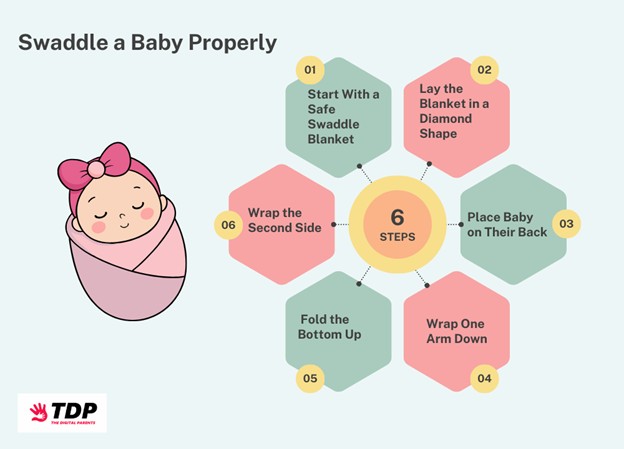
1. Start With a Safe Swaddle Blanket
You don’t need fancy gear. A simple muslin blanket or a Velcro-style swaddle works.
Muslin is great for newborns. Velcro is great for tired parents.
2. Lay the Blanket in a Diamond Shape
Fold the top corner down to create a straight edge. This keeps the fabric from bunching around the baby’s face.
3. Place Baby on Their Back
Always on their back. No exceptions. This is the safest position for any sleep, swaddled or not.
4. Wrap One Arm Down
Pull one side of the blanket across the baby’s body, tuck it snugly under their back, and keep the arm straight. Not stiff, just naturally down.
5. Fold the Bottom Up
Leave enough room for the hips to move. Babies should look cozy, not mummified.
6. Wrap the Second Side
Pull the opposite corner across and tuck it under. You should be able to fit two fingers between the blanket and the baby’s chest. If they’re turning purple or glaring at you as you owe them money, they’re too tight.
How Tight Should You Swaddle a Baby?

The honest answer: snug around the arms, loose around the hips.
You want the swaddle to hold their arms gently in place just enough, so they don’t smack themselves awake. But the hips and legs must stay flexible. Pediatric orthopedic research has shown that tight swaddling around the legs can increase the risk of hip dysplasia, and no parent needs another thing to worry about.
If the legs can bend and the hips can open slightly, you’re good.
Signs You Should Stop Swaddling
Every baby eventually outgrows the swaddle. The key signs are:
- They start rolling to the side or tummy.
- They break out every single night, no matter what you do.
- They act frustrated when wrapped.
- They sleep better with arms free (some babies are rebels)
When my son started rolling, we switched to a sleep sack with arms-out freedom. The adjustment took one terrible night and then… he slept better. Babies love proving us wrong.
Common Swaddling Mistakes Parents Make (And How to Avoid Them)
Swaddling Too Long
Once rolling starts, swaddling stops. Even if they “seem fine.” Safety comes first.
Making It Too Tight
Your baby should look wrapped, not compressed like a shipping package.
Using Thick Blankets
Overheating is a real concern. Stick to breathable, lightweight fabrics.
Putting Baby Down on Their Side
Nope. Back only while swaddled.
Final Thoughts From One Parent to Another
Swaddling doesn’t have to be stressful. It’s simply one of the tools that helps parents get through the newborn stage, especially during those long 3 a.m. nights.
So, try different styles, but make sure you follow the baby’s cues, and don’t stress too much about making it perfect.
Frequently Asked Questions
1. When should I stop swaddling my baby?
Most parents stop between 2 and 3 months, or whenever the baby shows rolling cues. The moment they start turning to the side, the swaddle retires.
2. Is it okay to swaddle a newborn all night?
Yes, as long as the baby sleeps on their back, the swaddle is breathable, and they’re not overheating. My rule was to check the chest: warm is fine, sweaty is not.
3. Can you swaddle a baby too tightly?
Yes. Arms snug, hips loose. If the baby can’t bend their legs comfortably, loosen them.
4. Should babies’ arms be up or down when swaddled?
Most traditional swaddles keep arms down, but some babies prefer arms-up styles (like certain zip-up swaddles). Try both and see what helps them sleep better.
5. Is swaddling safe for newborns?
Yes, when done correctly. Safe fabric, safe wrapping, and always on the back. Avoid tummy or side sleep while swaddled.